
Full Story
A Glowing Ocean Due to Bioluminescent Plankton
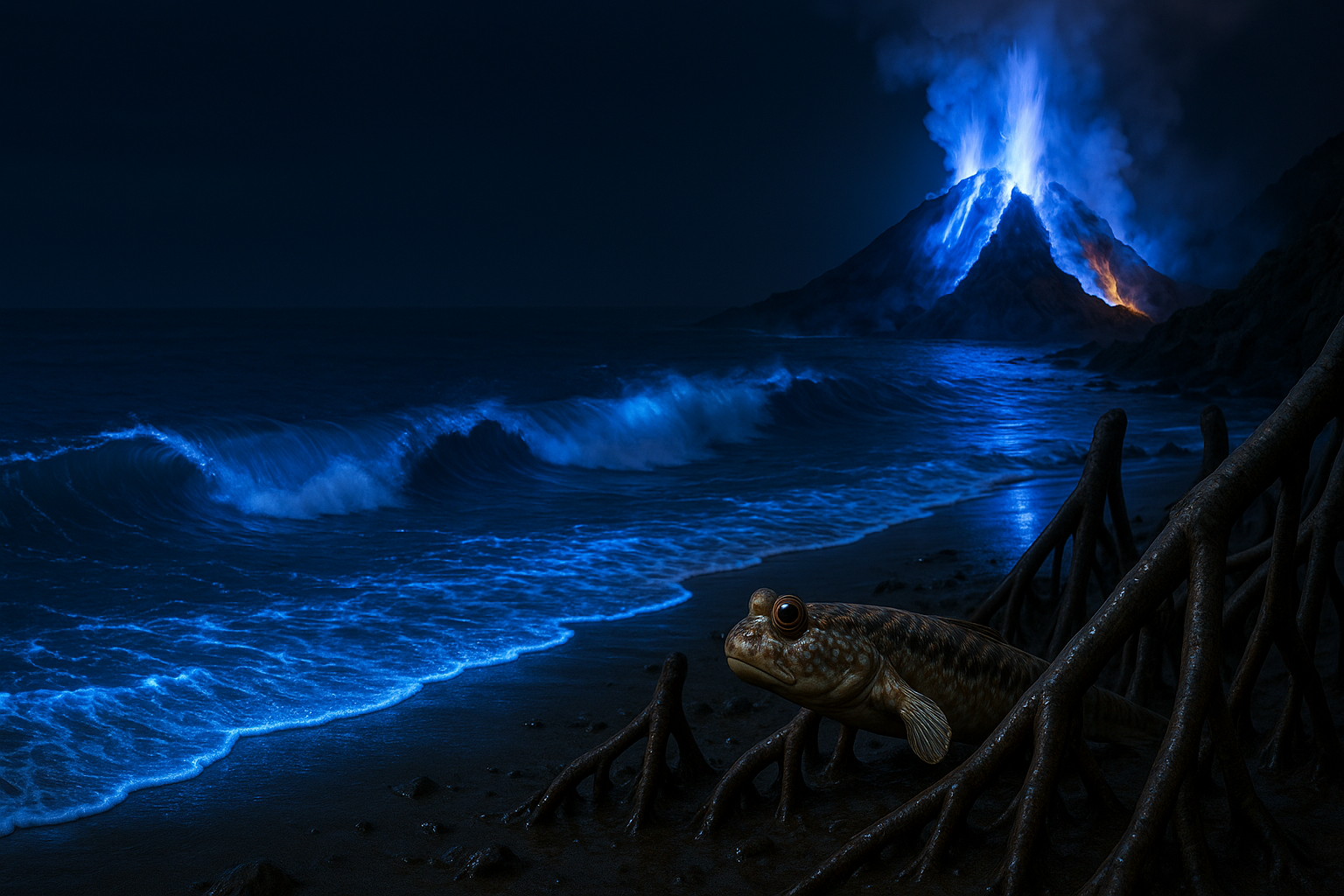
Imagine standing on a beach at night and seeing the waves glow with an eerie blue light. This magical phenomenon is caused by bioluminescent plankton—tiny marine organisms that produce light through a chemical reaction. When disturbed by movement, such as waves or swimmers, these plankton emit a glowing light that can light up the ocean surface like a natural neon show.
Bioluminescence is a survival tool for these plankton. It can startle predators or attract mates. This glowing ocean effect is most commonly seen in warm coastal waters around the world, including places like the Maldives, Puerto Rico, and California. The light can range from a soft blue to bright turquoise, creating a surreal and unforgettable experience.
Blue Lava Due to Burning Sulfur Gas
Lava is usually known for its bright red or orange glow, but on Indonesia’s Kawah Ijen volcano, the lava burns with an intense blue flame. This rare and striking blue lava is not the molten rock itself glowing blue but the result of burning sulfur gas.
At night, the sulfur gases escaping from the volcano ignite and burn with a bright blue flame. The sulfur melts into liquid and flows down the volcano’s slopes, creating the illusion of blue lava. This phenomenon is extremely rare and can only be seen in a few places worldwide.
The blue flames can reach heights of up to five meters and are best viewed at night to see their full brilliance. This natural spectacle is both beautiful and dangerous, as the sulfur gases are toxic and the terrain is hazardous.
A Fish That Walks on Land - Mudskippers
Fish that walk on land? It sounds like something out of a fantasy story, but mudskippers are real fish that have adapted to live both in water and on land. These fascinating creatures use their strong pectoral fins to 'walk' and climb on mudflats and mangrove roots.
Mudskippers breathe through their skin and the lining of their mouth and throat, allowing them to survive out of water for extended periods. They are found in tropical and subtropical regions, especially in Southeast Asia and Africa.
These fish are incredibly agile on land, able to jump and even climb small obstacles. Their unique lifestyle helps them avoid aquatic predators and exploit food sources unavailable to other fish. Watching a mudskipper move on land is truly a sight that challenges our ideas about fish behavior.
---
Nature never ceases to amaze us with its strange and wonderful creations. These three examples—glowing oceans, blue lava, and walking fish—show how reality can be just as incredible as fiction. Next time you see something that looks too strange to be true, remember that the natural world might just be showing you one of its many secrets.